What is Dry Floor Friction Testing?

TLDR: Dry floor friction testing measures slip resistance under dry conditions using the Tortus FFT device, producing a D rating under AS 4586. It is used for internal dry areas such as corridors, foyers, and office environments. For surfaces that may become wet, wet pendulum testing is the appropriate method. For NATA-accredited slip testing anywhere in Australia, call Australian Slip Testing on 0405 042 814.

Dry floor friction testing is one of two test methods used by Australian Slip Testing to assess slip resistance on floor surfaces. Where wet pendulum testing evaluates how a surface performs in wet conditions, dry floor friction testing measures performance under normal dry conditions, producing a result that is classified under AS 4586.

Understanding what the test measures, how it differs from wet pendulum testing, and where it is and is not appropriate is useful for anyone managing floor safety in a commercial or public building.

What Is Dry Floor Friction Testing?

Dry floor friction testing measures the Coefficient of Friction (CoF) of a floor surface under dry conditions. The test is performed using the Tortus Floor Friction Tester, a self-propelled device that travels across the floor at a consistent speed under a standardised load, continuously recording friction readings across the test path.

Results are classified under AS 4586 into D ratings, providing a standardised assessment of whether a dry surface meets recognised slip resistance thresholds. A D1 classification indicates the surface meets the minimum threshold. A D0 classification indicates it does not.

For a full breakdown of D ratings alongside P ratings, R ratings, and barefoot classifications, see our guide to Australian slip resistance ratings.

Slip Testing for Cleaning Companies
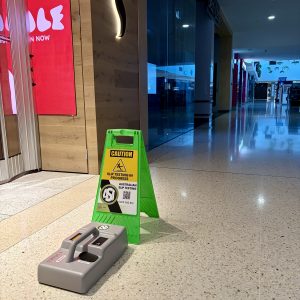
Dry slip testing at a shopping centre

How Dry Floor Friction Testing Differs from Wet Pendulum Testing

The two test methods measure different things and apply to different environments. They are not interchangeable and their results are not directly comparable.

Wet pendulum testing simulates a pedestrian heel striking a wet surface and produces P ratings used for compliance with NCC requirements and AS 4586 classifications in wet environments. It can be used across a wide range of surface types and environments, both wet and dry. See our guide to wet pendulum slip testing.

Dry floor friction testing measures the CoF of a surface under dry conditions only. It is not appropriate for any surface that is regularly exposed to water or may become wet. For those environments, wet pendulum testing is the correct method.

Australian Slip Testing conducts both tests at the same visit for most onsite jobs, which is why the standard onsite price covers both wet pendulum and dry FFT.

The Equipment

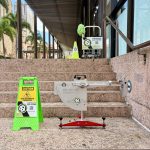
Dry floor friction testing is performed using the Tortus Floor Friction Tester, commonly referred to as the Tortus. Australian Slip Testing uses the Tortus 3 FFT, the current generation instrument used for this test method.

The Tortus is a self-propelled device fitted with a rubber slider that travels across the floor at a controlled speed under a standardised contact force. It records the dynamic coefficient of friction continuously across the test path rather than at a single point, which makes it useful for identifying variation in slip resistance across a surface, including worn patches, areas affected by cleaning products, or sections with inconsistent surface texture.

Like the wet pendulum, the Tortus must be regularly calibrated and verified on-site prior to testing to ensure results are accurate and traceable to NATA standards.

Slip Testing Services Across Central Queensland
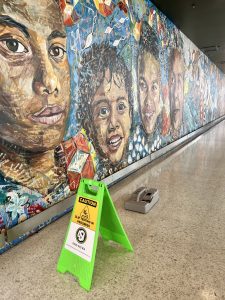
Dry floor slip testing a retail concourse

How the Test Is Conducted

The surface must be clean and dry before testing begins, free of contaminants, cleaning residue, wax, or coatings that are not part of the permanent surface finish. The Tortus is placed on the surface, verified on-site, then travels across the test path recording continuous CoF readings. Readings are averaged to produce a final CoF value, which is then classified against the D rating thresholds in AS 4586.

Testing is non-destructive and can be conducted with minimal disruption to normal building operations.

Where Dry Floor Friction Testing Is Appropriate

Dry floor friction testing is suited to internal areas that remain dry under normal conditions. Common environments include corridors, foyers, lift lobbies, office floors, retail concourses, aged care internal areas, school and university walkways, hospital dry clinical areas, strata common areas, and dry industrial and warehouse floors.

It is particularly useful for identifying variation across large floor areas, assessing the effect of cleaning regimes or maintenance practices on slip resistance over time, and supporting ongoing risk management documentation.

It is not appropriate for external surfaces, areas exposed to rain or water ingress, bathrooms, commercial kitchens, pool surrounds, or any other environment where the floor may become wet. For those environments, wet pendulum testing under AS 4586 or AS 4663 is the correct method.

Brisbane Tortus Testing

Book NATA-Accredited Slip Testing

Australian Slip Testing provides NATA-accredited dry floor friction testing and wet pendulum testing across Australia, including Brisbane, Sydney, Melbourne, Adelaide, Perth, Darwin, Hobart, and Canberra. Both tests are conducted at the same visit for most onsite jobs.

Call 0405 042 814 or email info@australiansliptesting.com.au to book or discuss your requirements.

Related Slip Testing Guides