TLDR: Strata managers and body corporates have a duty of care to manage slip hazards in common areas including pool surrounds, external pathways, car parks, stairways, entry foyers, and recreational facilities. NATA-accredited independent slip resistance testing provides documented evidence that the body corporate is actively managing this obligation. Results are suitable for risk management, insurance, and legal purposes. Call 0405 042 814 or email info@australiansliptesting.com.au to arrange testing.
Slip resistance testing is an important consideration for strata managers and body corporates across Australia. Common areas in strata properties present a range of slip hazards, and managing these hazards is a key part of meeting safety obligations, protecting residents and visitors, and reducing liability exposure.
This guide outlines what strata managers need to know about slip testing, including where testing is commonly required, what Australian Standards apply, and how regular independent testing supports compliance and risk management.
What Is Slip Resistance Testing and Why Does It Matter for Strata Properties?
Slip resistance testing measures how slip-resistant a pedestrian surface is under standardised conditions. In strata properties, this is particularly important because common areas are shared by a large number of residents, visitors, tradespeople, and delivery personnel, many of whom may have limited mobility or be unfamiliar with the environment.
Slip and fall incidents in common areas can result in serious injury, insurance claims, and legal action against the body corporate. Independent, NATA-accredited slip resistance testing provides measurable data that supports proactive risk management and demonstrates that the body corporate has taken reasonable steps to identify and manage slip hazards.
Which Areas of a Strata Property Require Slip Testing?
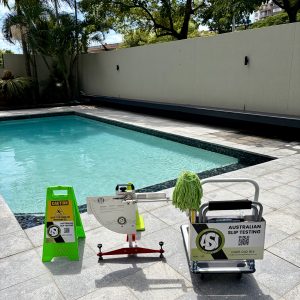
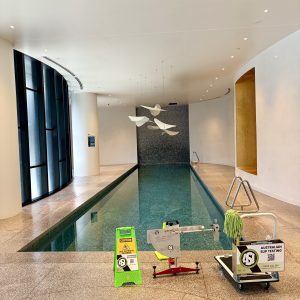
Pool surrounds and aquatic areas are among the highest risk areas in any strata property. Wet barefoot conditions, combined with smooth or worn tile surfaces, create significant slip hazards. Pool surrounds are tested using wet pendulum testing with Slider 55, which simulates barefoot skin contact with the surface. See our guide to understanding rubber sliders in AS 4586 and AS 4663.
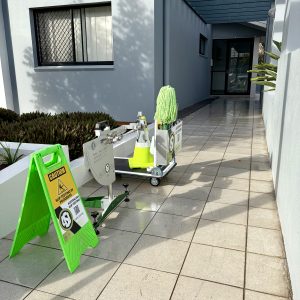
External pathways and walkways are exposed to rain, moisture, leaf litter, and algae growth, all of which can significantly reduce slip resistance over time. Regular testing of external pathways helps identify surfaces that may have deteriorated and require remediation or maintenance.
Car parks and basement areas often feature concrete or painted surfaces that can become slippery when wet, particularly near entry and exit points where water is tracked in from outside. Transition zones between wet and dry surfaces are a common slip hazard in basement car parks.
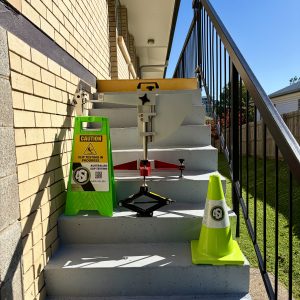
Stairways and ramps are subject to mandatory minimum slip resistance requirements under the National Construction Code. Both stair treads and ramp surfaces must meet minimum P ratings under AS 4586, making regular testing of these areas particularly important for compliance. See our guide to NCC slip testing requirements.
Entry foyers and lobbies experience high pedestrian traffic and are frequently exposed to tracked-in moisture, particularly during wet weather. Polished or smooth tile surfaces in entry foyers can become hazardous when wet.
Gym and recreational areas may include wet change rooms, shower areas, and pool access zones that require testing under barefoot conditions.
Balconies and common outdoor areas are exposed to the elements and may require periodic assessment, particularly where surface wear or algae growth has occurred over time.
What Australian Standards Apply to Slip Testing in Strata Properties?
Slip resistance testing in strata properties is conducted in accordance with AS 4586 and AS 4663. AS 4586 covers the slip resistance classification of new pedestrian surface materials and is relevant when specifying new flooring for common areas during construction or refurbishment. AS 4663 covers the slip resistance measurement of existing installed pedestrian surfaces and is the most relevant standard for strata managers assessing existing common area surfaces.
For a full explanation of slip resistance classifications including P ratings, R ratings, D ratings, and A-C barefoot ratings, see our guide to Australian slip resistance ratings.
Who Is Responsible for Slip Testing in a Strata Property?
In a strata property, the body corporate is generally responsible for the safety and maintenance of common areas. This includes identifying and managing slip hazards in shared pedestrian spaces. Strata managers acting on behalf of the body corporate play an important role in ensuring slip resistance testing is carried out, results are documented, and any identified hazards are addressed in a timely manner.
While specific legislative requirements vary between states and territories, the general principle of duty of care applies across Australia. A body corporate that has not taken reasonable steps to identify and manage slip hazards in common areas may face significant liability in the event of a slip and fall incident. Independent, NATA-accredited slip resistance testing provides documented evidence that the body corporate has taken a proactive and reasonable approach to managing slip risk.
How Often Should Slip Testing Be Conducted in Strata Properties?
There is no single mandated testing frequency for all strata properties. Testing is generally recommended after installation of new flooring in common areas, following any changes to cleaning products or cleaning regimes, after surface treatments, coatings, or sealants have been applied, following a slip or fall incident in a common area, as part of a routine risk management review (typically annually or biannually for high-risk areas), when surface wear or deterioration is observed, and prior to building handover for new strata developments.
For a full guide to slip testing frequency, see our guide to how often slip testing should be conducted.
How Does Cleaning Affect Slip Resistance in Strata Properties?
Cleaning products, surface treatments, and maintenance practices can all affect the slip resistance of common area surfaces. Wax-based cleaning products, certain floor polishes, and some chemical treatments can reduce slip resistance, particularly on smooth tile surfaces.
Strata managers should ensure cleaning contractors are aware of slip resistance requirements and that cleaning products used in common areas are appropriate for the surface type. Where slip resistance testing identifies a surface that does not meet required classifications, reviewing the cleaning regime is an important first step before considering more costly remediation options. See our guide to slip testing for cleaning companies.
What Happens After a Slip Test Is Completed?
Following slip resistance testing, Australian Slip Testing provides a detailed test report outlining tested areas and surface descriptions, testing methods used including wet pendulum testing and dry floor friction testing, slip resistance classifications achieved under AS 4586 and AS 4663, and practical commentary on results.
This report provides strata managers and body corporates with documented evidence of testing, supporting risk management, insurance, and compliance purposes. Where surfaces are identified as not meeting required classifications, the report provides a clear basis for maintenance planning and remediation decisions.
Why NATA-Accredited Testing Matters for Strata Properties
For strata managers and body corporates, engaging a NATA-accredited testing provider is important for several reasons. NATA (National Association of Testing Authorities) accreditation means the testing provider has been independently assessed against internationally recognised standards for testing competence. Results from a NATA-accredited provider are traceable, reliable, and suitable for compliance, legal, and insurance purposes.
In the event of a slip and fall incident or legal dispute, results from a non-accredited provider may not carry the same weight as results from a NATA-accredited laboratory. Engaging an accredited provider from the outset protects the body corporate and provides defensible documentation.
Frequently Asked Questions
Is slip testing a legal requirement for strata properties in Australia?
There is no single law that mandates slip testing for all strata properties across Australia. However, body corporates have a general duty of care to maintain safe common areas, and workplace health and safety legislation in each state and territory imposes obligations on persons who manage or control a workplace. Independent slip testing is a practical and defensible way to demonstrate that these obligations are being met.
Who pays for slip testing in a strata property?
Slip testing of common areas is generally funded through the body corporate, typically from the administrative fund or maintenance budget. Where testing is required following a specific incident or as part of a legal matter, costs may be handled differently depending on the circumstances.
Can slip testing be conducted without disrupting residents?
Yes. Slip resistance testing is non-destructive and can generally be conducted without closing common areas or significantly disrupting residents. For high-traffic areas such as entry foyers or lifts, testing can be scheduled during off-peak hours or outside normal business hours.
What should a strata manager do if a surface fails a slip resistance test?
If a surface does not meet the required slip resistance classification, the first step is to review the cleaning regime and any surface treatments that may be affecting performance. If cleaning changes do not resolve the issue, remediation options may include anti-slip treatments, surface grinding or profiling, or replacement of the flooring material. Australian Slip Testing can offer practical guidance on appropriate next steps.
Does slip resistance change over time in strata common areas?
Yes. Surface wear, cleaning practices, algae growth, and environmental exposure can all reduce slip resistance over time. This is why periodic testing is recommended even for surfaces that have previously met required classifications.
How do I arrange slip testing for a strata property?
Call 0405 042 814 or email info@australiansliptesting.com.au to discuss your property requirements. Our team can assist with scheduling, scope of works, and testing across single sites or multi-site strata portfolios.
Arrange Slip Testing for Your Strata Property
Australian Slip Testing provides NATA-accredited slip resistance testing for strata properties across Australia, including the Gold Coast, Sunshine Coast, Ipswich, Logan, Toowoomba, Canberra, Hobart, and surrounding regions.
Call 0405 042 814 or email info@australiansliptesting.com.au to discuss your strata slip testing requirements.
Related Slip Testing Articles

Australian Slip Resistance Ratings Explained
TLDR: Australian slip resistance ratings classify how slip-resistant a surface is under AS 4586. Four testing methods produce four separate rating scales: P ratings (wet pendulum),

What is Wet Pendulum Slip Testing?
Wet pendulum slip testing is a widely used and reliable method for measuring slip resistance on floor surfaces in wet conditions. This test uses a calibrated pendulum device to sim
What is Dry Floor Friction Testing?
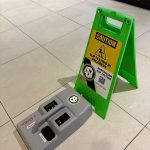
Dry floor friction testing is a practical method for assessing slip resistance under normal, dry conditions. This testing method measures how easily a person might slip on a dry su
How Often Should Slip Testing Be Conducted?
TLDR: There is no fixed mandatory testing interval under Australian Standards. How often slip testing should be conducted depends on the environment, traffic levels, surface type,