TLDR: Australian slip resistance ratings classify how slip-resistant a surface is under AS 4586. Four testing methods produce four separate rating scales: P ratings (wet pendulum), D ratings (dry friction), A-B-C ratings (wet barefoot), and R ratings (oil-wet ramp). Each applies to different environments and cannot be directly compared. The wet pendulum test and P ratings are the most widely used in Australia for existing floors and compliance purposes.
Slip Ratings Explained
Slip resistance ratings are one of the most important considerations when assessing floor safety in Australia. Whether you’re managing a commercial building, specifying new flooring, or investigating a slip incident, understanding Australian slip resistance ratings helps ensure surfaces are compliant, safe, and fit for purpose.
In Australia, slip resistance ratings are guided by Australian Standard AS 4586 and the associated handbooks HB 197 and HB 198. These standards are closely linked with the National Construction Code (NCC), which includes minimum slip resistance requirements for certain building elements.
Australian Slip Resistance Testing Methods
AS 4586 describes four primary testing methods. Each measures slip resistance differently, applies to different environments, and cannot be directly compared.
- Wet Pendulum Slip Resistance Test (P Ratings)
- Dry Floor Friction Test (D Ratings)
- Wet Barefoot Inclining Platform Test (A, B, C Ratings)
- Oil-Wet Inclining Platform Test (R Ratings)
Wet Pendulum Slip Resistance Ratings (P Ratings)
The Wet Pendulum Test is the most widely used slip resistance test in Australia, particularly for existing floors and public access areas.
A swinging pendulum arm fitted with a spring-loaded rubber slider contacts the test surface over a prescribed distance. The resistance to motion is measured, producing a Slip Resistance Value (SRV). Results are classified from P0 (lowest) to P5 (highest).
| P Ratings -- Slider 96 | |
| Classification | Slip Resistance Value (SRV) |
|---|---|
| P0 | Below 12 |
| P1 | 12 to 24 |
| P2 | 25 to 34 |
| P3 | 35 to 44 |
| P4 | 45 to 54 |
| P5 | Above 54 |
| P Ratings -- Slider 55 | |
| Classification | Slip Resistance Value (SRV) |
|---|---|
| P0 | Not classified |
| P1 | Below 20 |
| P2 | 20 to 34 |
| P3 | 35 to 39 |
| P4 | 40 to 44 |
| P5 | Above 44 |
Two rubber sliders are used depending on the application:
- Slider 96 — used for most shod pedestrian areas
- Slider 55 — used for barefoot areas
Because the rubber hardness differs, the SRV ranges for each P rating differ between sliders. More detail on rubber slider selection is available on our site.
Why the Wet Pendulum Test Is Most Common
The Wet Pendulum Test is widely considered the most practical method for existing buildings because it can be conducted on-site, tests real-world conditions, applies to existing surfaces, and is widely referenced in risk assessments and legal matters.
It is commonly used for shopping centres, hospitals, schools, hotels, aged care facilities, commercial buildings, and public walkways.
More information: What is Wet Pendulum Slip Testing?
Dry Floor Friction Ratings (D Ratings)
The Dry Floor Friction Test measures slip resistance on dry surfaces only. A specialised machine fitted with a Slider 96 rubber measures the Coefficient of Friction (CoF), producing one of two classifications:
- D1 — CoF of 0.40 or above
- D0 — CoF below 0.40
This method suits internal flooring and areas that remain dry. It should not be used where surfaces may become wet; external entrances, bathrooms, and commercial kitchens all require the Wet Pendulum Test instead.
More information: What is Dry Floor Friction Testing?
| D Ratings -- Dry Floor Friction | |
| Classification | Coefficient of Friction (CoF) |
|---|---|
| D0 | Below 0.40 |
| D1 | 0.40 or above |
Wet Barefoot Slip Resistance Ratings (A, B, C)
The Wet Barefoot Inclining Platform Test is a laboratory-based test for wet barefoot environments. Technicians walk barefoot on a flooring sample while the platform angle increases until slipping occurs. Results are classified as A (12 degrees or above), B (18 degrees or above), or C (24 degrees or above).
Commonly specified for swimming pool surrounds, aquatic centres, change rooms, shower areas, and water parks. Because it is a laboratory test, it is used when specifying new flooring products rather than testing existing surfaces.
| Wet Barefoot Ratings -- Inclining Platform | |
| Classification | Mean Angle |
|---|---|
| A | 12 degrees or above |
| B | 18 degrees or above |
| C | 24 degrees or above |
Oil-Wet Ramp Ratings (R Ratings)
The Oil-Wet Inclining Platform Test is a laboratory-based method for industrial and commercial environments. Technicians in standard-approved boots walk across an oil-coated flooring sample while the platform angle increases. Results are classified from R9 (6 degrees or above) through to R13 (35 degrees or above).
Commonly specified for commercial kitchens, food preparation areas, industrial environments, and manufacturing facilities. Like the barefoot test, it is used for product specification rather than on-site testing.
| R Ratings -- Oil-Wet Ramp | |
| Classification | Mean Angle |
|---|---|
| R9 | 6 to 9 degrees |
| R10 | 10 to 18 degrees |
| R11 | 19 to 26 degrees |
| R12 | 27 to 34 degrees |
| R13 | 35 degrees or above |
National Construction Code Slip Resistance Requirements
The NCC includes slip resistance requirements in Volume One (Class 2-9 buildings) and Volume Two (Class 1 and 10 buildings). Requirements apply to stair treads, stair nosings, ramps, and stairway landings only; the NCC does not cover all pedestrian surfaces.
Deemed-to-Satisfy provisions specify minimum classifications. For stair treads and landings: P3 or R10 in dry conditions, P4 or R11 in wet conditions. For ramps not steeper than 1:14: P3 or R10 dry, P4 or R11 wet. For ramps steeper than 1:14 but not steeper than 1:8: P4 or R11 dry, P5 or R12 wet.
The NCC is a performance-based code, though compliance can also be achieved through alternative solutions, expert judgement, or risk assessments. Because NCC requirements are limited to specific building elements, slip resistance obligations extend further under WHS legislation and duty of care.
More information: NCC Slip Testing Requirements.
| NCC Deemed-to-Satisfy Requirements | ||
| Location | Wet Pendulum | Oil-Wet Ramp |
|---|---|---|
| Stair treads and landings (dry) | P3 | R10 |
| Stair treads and landings (wet) | P4 | R11 |
| Dry stair nosings | P3 | -- |
| Wet stair nosings | P4 | -- |
| Ramps not steeper than 1:14 (dry) | P3 | R10 |
| Ramps not steeper than 1:14 (wet) | P4 | R11 |
| Ramps steeper than 1:14, not steeper than 1:8 (dry) | P4 | R11 |
| Ramps steeper than 1:14, not steeper than 1:8 (wet) | P5 | R12 |
Which Slip Resistance Rating Is Most Important?
Each testing method has strengths and limitations. For existing buildings, the Wet Pendulum Test and P ratings are the most practical; testing is conducted on-site, results reflect real-world conditions, and P ratings are widely used in risk assessments and legal matters.
Understanding slip resistance ratings helps reduce slip and fall risks, meet compliance requirements, demonstrate due diligence, and protect building owners and operators. Testing is commonly conducted for shopping centres, hospitals, schools, aged care facilities, hotels, strata properties, commercial buildings, and industrial facilities.
Frequently Asked Questions
What are Australian slip resistance ratings?
Australian slip resistance ratings classify how slip-resistant a surface is. These include P ratings, R ratings, A-C ratings, and D ratings depending on the testing method used.
What is a P3 slip rating?
A P3 rating indicates moderate slip resistance with an SRV of 35 to 44 using Slider 96. It is suitable for many internal wet environments depending on risk factors including traffic volume, footwear, and cleaning regimen.
What is the highest slip resistance rating?
The highest ratings under each method are P5 (wet pendulum), R13 (oil-wet ramp), and C (wet barefoot). These are typically specified for high-risk environments.
Are NCC slip resistance requirements mandatory?
Yes. The NCC includes mandatory slip resistance requirements for stairs, nosings, and ramps. However, these requirements are limited and do not cover all pedestrian surfaces. Other obligations under WHS legislation and duty of care also apply.
Get Your Floors Tested by a NATA-Accredited Specialist
Australian Slip Testing provides independent slip resistance testing across Australia, using calibrated equipment and recognised Australian Standards. Results are suitable for compliance audits, insurance requirements, and due diligence documentation.
Call 0405 042 814 or email info@australiansliptesting.com.au for a free quote.
For sample and laboratory testing, visit Australian Slip Ratings.
Related Slip Testing Guides
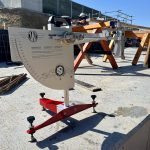
What is Wet Pendulum Slip Testing?
Wet pendulum slip testing is a widely used and reliable method for measuring slip resistance on floor surfaces in wet conditions. This test uses a calibrated pendulum device to sim
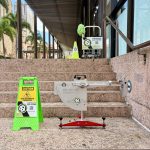
Is Slip Testing Required Under the National Construction Code (NCC)?
Slip resistance is a critical safety consideration in buildings across Australia, but is slip testing actually required under the National Construction Code (NCC).

AS 1428.1:2021 Slip Resistance Requirements
TLDR: AS 1428.1:2021 requires all continuous accessible paths of travel, circulation spaces, step ramps, kerb ramps, and shower folding seats to have a slip-resistant surface. The

How Often Should Slip Testing Be Conducted?
TLDR: There is no fixed mandatory testing interval under Australian Standards. How often slip testing should be conducted depends on the environment, traffic levels, surface type,