TLDR: AS 1428.1:2021 requires all continuous accessible paths of travel, circulation spaces, step ramps, kerb ramps, and shower folding seats to have a slip-resistant surface. The standard defines slip-resistant but does not prescribe a test method or minimum classification threshold. For that, it refers to AS 4586, AS 4663, HB 197, and SA HB 198. Compliance cannot be demonstrated through AS 1428.1 alone. For NATA-accredited slip testing anywhere in Australia, call Australian Slip Testing on 0405 042 814.
AS 1428.1:2021 is the primary Australian Standard for accessible building design and one of the most widely referenced documents in NCC compliance. Slip resistance is a core requirement within it, appearing across multiple sections covering paths of travel, ramps, and specific fixtures. Yet the standard is frequently misunderstood when it comes to what it actually requires and, more importantly, what it does not require in terms of testing and verification.
This guide works through what AS 1428.1:2021 says about slip resistance, where the requirements appear, how the standard defines the term, and what you actually need to demonstrate compliance. It is written for building designers, certifiers, facilities managers, strata managers, and anyone responsible for accessible building work under the NCC.
How AS 1428.1:2021 Sits Within the NCC
AS 1428.1:2021 is a design standard, not a building code. Its purpose, as set out in its introduction, is to provide minimum technical details for accessible buildings. The NCC and the Disability (Access to Premises — Buildings) Standards (Premises Standards) define which building classes must be accessible and where within those buildings access must be provided. They then reference AS 1428.1 as the technical means of achieving a deemed-to-satisfy solution for those access provisions.
The practical consequence is that conforming to AS 1428.1 is how a building designer or certifier demonstrates that the access requirements of the NCC and Premises Standards have been met. Where AS 1428.1 requires slip-resistant surfaces, that requirement flows directly through to NCC compliance. It is not optional or advisory for building work within scope.
Where Slip Resistance Appears in AS 1428.1:2021
Slip resistance requirements appear in four distinct locations in AS 1428.1:2021, covering different elements of the accessible built environment.
Section 4.1 - Continuous Accessible Paths of Travel and Circulation Spaces
Section 4.1 is the primary slip resistance provision in the standard. It states that a continuous accessible path of travel and any circulation spaces shall have a slip-resistant surface, and that the texture of the surface shall be traversable by people who use a wheelchair and those with an ambulant or sensory disability.
This is a broad requirement that applies to the full extent of an accessible path of travel through a building, from the property boundary through to all areas required to be accessible. It covers internal and external surfaces, horizontal and inclined surfaces within walkway gradient limits, and any circulation spaces such as those at doorways, turns, and ramps.
Clause 7.6.3 - Step Ramps
Clause 7.6.3 states that step ramps shall have a slip-resistant surface. Step ramps are inclined surfaces on an accessible path of travel with a maximum rise of 190mm, a maximum horizontal length of 1900mm, and a gradient not steeper than 1 in 10. They appear frequently at entries to buildings where a small level change exists. The specific mention of slip resistance in this clause reinforces that the requirement applies to these transitional elements, not only to main walkway surfaces.
Clause 7.7.3 - Kerb Ramps
Clause 7.7.3 states that kerb ramps shall have a slip resistant surface. Kerb ramps are located within or attached to a kerb, with a maximum rise of 190mm, a maximum length of 1520mm, and a gradient not steeper than 1 in 8. They are among the highest-risk elements on an accessible path of travel, combining a steep gradient with exposure to weather. The slip resistance requirement here reflects that risk directly.
Clause 12.5.9 - Folding Shower Seat
Clause 12.5.9 requires the folding seat in an accessible shower recess to be slip-resistant. This is a fixture-level requirement that is often overlooked when the broader discussion of slip resistance in AS 1428.1 focuses only on floor surfaces. An accessible shower seat that does not meet this requirement is a non-conformance under the standard, regardless of the condition of the floor surface around it.
How AS 1428.1:2021 Defines Slip-Resistant
AS 1428.1:2021 does include a definition of the term “slip resistant”. Clause 1.4.22 defines it as: the property of a surface having a frictional force-opposing movement of an object across a surface.
This is a physical definition that describes the underlying property the requirement is targeting. What it does not do is attach a measurable threshold to that definition. The standard does not state that a surface must achieve a P3 rating, or any other specific classification, to be considered slip-resistant for the purposes of the standard. That gap is intentional. The test methodology and minimum classification thresholds are addressed in the documents the standard refers to, not in AS 1428.1 itself.
The Referenced Documents and What They Provide
The Note attached to Section 4.1 of AS 1428.1:2021 directs readers to four documents for information relevant to slip resistance: AS 4586, AS 4663, HB 197, and SA HB 198. All four appear in the bibliography as informative references rather than normative references.
This distinction matters. Normative references in a standard form part of the requirements. Informative references provide guidance. AS 1428.1:2021 mandates that surfaces shall be slip resistant but does not mandate a specific test method by making AS 4586 or AS 4663 normative references. The test methodology and classification thresholds sit in those informative documents. In practice, however, there is no other credible basis for demonstrating compliance with the slip resistance requirement, which is why these documents are so central to any compliance assessment.
AS 4586 is the Australian Standard for slip resistance classification of new pedestrian surface materials. It contains the wet pendulum test, the wet barefoot inclining platform test, and the oil wet inclining platform test, along with the P rating, barefoot rating, and R rating classification systems. For new surfaces and products being assessed at the specification stage, AS 4586 is the primary reference. See our guide to Australian slip resistance ratings and our guide to wet pendulum slip testing for a full breakdown of how these work.
AS 4663 covers slip resistance measurement of existing installed surfaces. It uses the same wet pendulum methodology as AS 4586 but is designed for in-situ testing on surfaces already installed and in service. For existing buildings, completed construction, or any verification of installed surface performance, AS 4663 is the applicable standard. Because installation quality, grout joints, sealers, cleaning regimes, and surface wear all affect real-world performance, product test data under AS 4586 does not substitute for in-situ testing under AS 4663.
HB 197 and SA HB 198 provide practical guidance on applying slip resistance requirements, including minimum classification recommendations for different environments and surface types. SA HB 198 in particular is referenced in the NCC itself for the specification and testing of slip resistance on pedestrian surfaces. Together these documents give designers and certifiers the framework for determining what classification is appropriate for a given surface and environment, something AS 1428.1 alone does not provide.
What This Means for Compliance in Practice
Compliance with the slip resistance requirement of AS 1428.1:2021 cannot be demonstrated through AS 1428.1 alone. The standard tells you that surfaces must be slip resistant. The referenced documents tell you what that means in measurable terms and how to verify it.
For new building work, compliance typically requires specifying surfaces that have been tested under AS 4586 and have achieved the classification appropriate for their environment and intended use, as determined by reference to HB 197 and SA HB 198. This is a design-stage obligation. Selecting a compliant product does not, however, guarantee a compliant installed surface.
For verification of installed surfaces, whether at practical completion, as part of an ongoing maintenance program, or following a change in surface condition, testing under AS 4663 is the applicable method. A certifier or building inspector requiring evidence that an accessible path of travel meets the slip resistance requirement of AS 1428.1 will need a test report produced by a NATA-accredited provider under AS 4663. A product data sheet, a visual assessment, or a general statement that the surface appears slip-resistant does not meet this standard.
It is also worth noting that slip resistance can change over time. A surface that tested well at installation may not perform the same way after years of pedestrian traffic, repeated cleaning, application of sealers, or surface wear. AS 1428.1’s requirement is an ongoing obligation attached to the accessible path of travel, not a one-time specification check. For more on frequency of testing, see our guide to how often slip testing should be conducted.
NCC Compliance and the Role of NATA Accreditation
Because AS 1428.1:2021 is referenced by the NCC and Premises Standards as the deemed-to-satisfy path for access compliance, its slip resistance requirements carry the same regulatory weight as NCC provisions for in-scope building work. Certifiers, building inspectors, and insurers will expect test results that are traceable to NATA-accredited methodology.
NATA accreditation under ISO/IEC 17025 provides assurance that testing has been conducted by a competent provider using validated, calibrated equipment and a documented methodology. A test report from a NATA-accredited provider is the form of evidence that will be accepted in a compliance audit, a post-incident investigation, or an insurance matter. Testing conducted without NATA accreditation does not carry the same weight and may not be accepted by certifiers or insurers.
Australian Slip Testing is NATA-accredited for wet pendulum slip resistance testing under AS 4586 and AS 4663. We operate across Australia including Brisbane, Sydney, Melbourne, Adelaide, Perth, Darwin, Hobart, and Canberra. For more on what the NCC specifically requires in terms of slip testing, see our guide to NCC slip testing requirements.
Book NATA-Accredited Slip Testing
If you need slip resistance testing to support compliance with AS 1428.1, NCC, or Premises Standards requirements, or to verify the performance of installed surfaces on an accessible path of travel, Australian Slip Testing can help.
Call 0405 042 814 or email info@australiansliptesting.com.au to book or discuss your requirements.
Related Slip Testing Guides
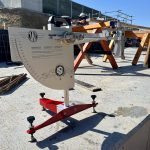
What is Wet Pendulum Slip Testing?
Wet pendulum slip testing is a widely used and reliable method for measuring slip resistance on floor surfaces in wet conditions. This test uses a calibrated pendulum device to sim
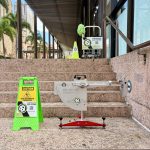
Is Slip Testing Required Under the National Construction Code (NCC)?
Slip resistance is a critical safety consideration in buildings across Australia, but is slip testing actually required under the National Construction Code (NCC).

Australian Slip Resistance Ratings Explained
TLDR: Australian slip resistance ratings classify how slip-resistant a surface is under AS 4586. Four testing methods produce four separate rating scales: P ratings (wet pendulum),
How Often Should Slip Testing Be Conducted?
TLDR: There is no fixed mandatory testing interval under Australian Standards. How often slip testing should be conducted depends on the environment, traffic levels, surface type,