TLDR: Australian Slip Testing provides NATA-accredited slip resistance testing across Cairns and the wider Far North Queensland region. We test hotels, resorts, retail centres, healthcare facilities, aged care, education, strata, and hospitality environments using wet pendulum and dry floor friction methods in accordance with AS 4586 and AS 4663. Cairns’ tropical climate creates some of Australia’s most demanding slip resistance conditions. Results are objective, traceable, and suitable for compliance, legal, and insurance purposes. Call 0405 042 814 or email info@australiansliptesting.com.au.
Slip Resistance Testing in Cairns and Far North Queensland
Australian Slip Testing provides NATA-accredited slip resistance testing across Cairns and the wider Far North Queensland region. Accredited to ISO/IEC 17025, our testing delivers objective, traceable results suitable for compliance, legal, and insurance purposes. We work with facility managers, property owners, strata managers, builders, and building operators across commercial, retail, healthcare, aged care, hospitality, and industrial environments throughout Cairns and Far North Queensland.
As Far North Queensland’s largest city and a major international tourism destination, Cairns presents a unique combination of high foot traffic, extreme tropical climate conditions, and diverse built environment demands that make regular slip resistance testing an essential part of risk management and compliance with Australian Standards AS 4586 and AS 4663.
Why Slip Testing Matters in Cairns
Cairns sits in one of Australia’s wettest regions. The wet season brings intense and prolonged rainfall, extreme humidity, and persistent moisture across building entries, resort pools, covered walkways, ramps, stairways, and outdoor dining areas. These conditions are compounded by the city’s significant tourism and hospitality sector, where high volumes of foot traffic from guests unfamiliar with local conditions increase the risk of slip incidents.
Moisture, tropical vegetation debris, algae growth, and surface contamination from outdoor environments all contribute to floor surface degradation over time. In a city where hotels, resorts, restaurants, retail centres, and public facilities operate at high capacity year-round, maintaining compliant slip resistance levels is a critical operational and legal responsibility.
Accredited slip resistance testing conducted in line with AS 4586 and AS 4663 delivers results that are reliable, repeatable, and suitable for compliance reporting, insurance documentation, and legal purposes.
How Our Slip Testing Works
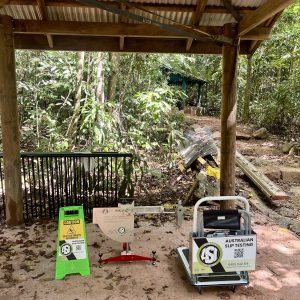
Australian Slip Testing conducts non-disruptive, onsite testing across Cairns using industry-recognised methods accredited by NATA. AS 4586 applies to the classification of new floor surfaces, while AS 4663 applies to the assessment of existing installed surfaces.
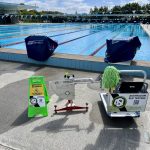
Wet pendulum slip testing measures slip resistance in wet conditions using a calibrated pendulum device and is the most widely used slip test method in Australia. It applies to most commercial, public, and external environments and is widely referenced in legal matters and risk assessments. Given Cairns’ tropical climate, wet pendulum testing is particularly relevant across the region’s outdoor areas, hotel pool surrounds, resort walkways, and building transition zones. See our wet pendulum slip testing guide.
Dry floor friction testing measures the Coefficient of Friction on dry internal surfaces using the Tortus Floor Friction Tester. It is used for internal environments expected to remain dry such as corridors, office lobbies, and retail spaces. See our dry floor friction testing guide.
All results are classified in accordance with AS 4586. For a full explanation of P, D, and R ratings, see our guide to Australian slip resistance ratings.
Each inspection includes a detailed test report outlining tested areas, surface descriptions, methods used, slip resistance classifications, and clear practical commentary.
Industries We Serve in Cairns
Australian Slip Testing works with a broad range of clients across Cairns and Far North Queensland.
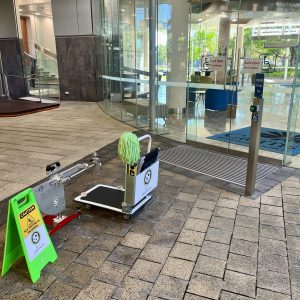
Hotels, resorts, and hospitality venues face some of the highest slip risk of any building type, with pool surrounds, outdoor dining areas, covered walkways, lobby entries, and wet amenities all requiring regular assessment. Cairns’ tourism-driven economy makes this sector a particular focus for independent slip testing.
Commercial office buildings require testing across lift lobbies, corridors, stairways, ramps, and entry foyers. Surface wear and cleaning practices in high-traffic environments can affect slip resistance over time.
Retail and shopping centres present slip risks across tiled concourses, entry points, food court areas, and amenities. Cairns Central and other major retail precincts generate consistent demand for independent slip testing.
Hospitals and healthcare facilities require careful assessment across clinical areas, corridors, wet areas, and patient bathrooms. Slip resistance is a critical component of patient and staff safety across Cairns’ healthcare network, including Cairns Hospital.
Aged care facilities must manage slip risk for residents with varying levels of mobility. Regular testing across internal corridors, bathrooms, and common areas is an important part of duty of care obligations. See our guide to slip testing for aged care and schools.
Education facilities including schools, TAFE campuses, and James Cook University’s Cairns campus require assessment across canteens, amenities, external walkways, and high-traffic corridors.
Strata and holiday letting properties require testing across common area pathways, car parks, pool decks, stairways, and external walkways. Body corporates and strata managers across Cairns use independent testing to support safety and manage liability. See our strata managers guide to slip testing.
Facilities management companies operating across Cairns use independent slip testing as part of scheduled safety audits and risk management programs. See our slip testing guide for facilities management companies.
Cleaning companies and contractors working on Cairns commercial properties can use slip testing to verify floor performance before and after treatments. See our slip testing guide for cleaning companies.
Builders and developers use slip resistance testing at practical completion to confirm compliance with NCC requirements and AS 4586 classifications. See our slip testing guide for builders and construction projects.
Where We Test in Cairns
Australian Slip Testing regularly provides slip resistance testing across Cairns and Far North Queensland, including Cairns CBD, Cairns North, Portsmith, Manunda, Westcourt, Earlville, Woree, Manoora, Bungalow, Trinity Beach, Palm Cove, Smithfield, Gordonvale, Innisfail, and surrounding areas. Our technicians also travel across the broader Far North Queensland region to support regional facilities and multi-site portfolios.
Frequently Asked Questions
How often should slip testing be carried out in Cairns?
There is no single mandated frequency for all buildings. Testing is generally recommended after any flooring work or changes to cleaning regimes, following a slip incident, and periodically as part of an ongoing risk management program. Many Cairns facility and property managers test annually or biannually, with more frequent testing in high-traffic or high-risk areas such as hotel pool surrounds and public entry points. See our guide to how often slip testing should be conducted.
Does Cairns' tropical climate affect slip resistance?
Yes, significantly. Cairns receives some of Australia’s highest annual rainfall, and the wet season brings intense humidity, persistent moisture, and surface contamination that can rapidly degrade floor performance. Algae growth, tracked-in debris, and moisture in transition zones between outdoor and indoor surfaces are all common contributors to slip risk in the region.
What is NATA accreditation and why does it matter?
NATA (National Association of Testing Authorities) accreditation means a testing provider has been independently assessed and found to meet internationally recognised standards for testing competence. For slip testing in Cairns, NATA accreditation means results are traceable, reliable, and suitable for compliance, legal, and insurance purposes.
What happens after a slip test is completed?
Following testing, Australian Slip Testing provides a detailed written report outlining tested areas, surface descriptions, methods used, slip resistance classifications, and practical commentary. This report can be used for compliance documentation, insurance purposes, risk management, and maintenance planning.
Do you test hotel and resort properties in Cairns?
Yes. Australian Slip Testing regularly works with hotels, resorts, and hospitality venues across Cairns, assessing pool surrounds, outdoor dining areas, lobby entries, covered walkways, and wet amenities.
Related Queensland Slip Testing
Slip Resistance Testing Townsville
Australian Slip Testing provides NATA-accredited slip resistance testing across Townsville and the wider North Queensland region. Accredited to ISO/IEC 17025, our testing delivers

Slip Testing Services Across Central Queensland
TLDR: Australian Slip Testing provides NATA-accredited slip resistance testing throughout Central Queensland, including Rockhampton, Bundaberg, Gladstone, Hervey Bay, Maryborough,
Slip Testing Sunshine Coast
Australian Slip Testing provides NATA-accredited slip resistance testing across the Sunshine Coast and surrounding South East Queensland region. Accredited to ISO/IEC 17025, our te
Book Your NATA-Accredited Slip Test in Cairns
Call 0405 042 814 or email info@australiansliptesting.com.au to arrange testing across Cairns and Far North Queensland.