TLDR: Facilities management companies carry direct liability for slip hazards in the buildings they manage. When a slip and fall incident occurs, the question asked of the FM is whether they had a documented, proactive slip risk management program. Independent NATA-accredited slip resistance testing provides that documentation, supports contractor oversight, and delivers consistent, legally defensible results across single sites and national multi-site portfolios. Call 0405 042 814 or email info@australiansliptesting.com.au to discuss your portfolio requirements.
Facilities management companies carry significant responsibility for the safety, compliance, and maintenance of the buildings and assets they manage. Floor surfaces are one of the most consistent sources of slip and fall risk across commercial, retail, healthcare, and public sector environments, and managing that risk requires more than routine maintenance. Independent, accredited slip resistance testing provides facilities managers with objective, documented data to support risk management decisions, contractor oversight, compliance obligations, and liability protection across single sites and large multi-site portfolios.
Australian Slip Testing provides NATA-accredited slip resistance testing for facilities management companies across Australia, supporting the full range of testing requirements that modern facilities management contracts demand.
The Liability Problem Facilities Managers Actually Face
Slip and fall incidents are one of the most common causes of injury in commercial and public buildings. When one occurs in a managed building, the facilities management company is typically one of the first parties examined. What was your slip risk management program? When did you last test the surface? What did the results show? What action did you take?
Without independent test results and a documented testing history, a facilities manager has no objective basis to answer those questions. A general assertion that floors were maintained to a safe standard is not evidence. A schedule of NATA-accredited test reports is.
The same applies in insurance claim reviews, regulatory investigations, and building owner disputes. The facilities management company that can produce a documented testing history, with results from a NATA-accredited provider, is in a fundamentally different position to one that cannot.
Why Manufacturer Ratings Are Not Enough
Facilities managers frequently inherit buildings where flooring products were specified with laboratory-based slip resistance ratings. These ratings are produced on new, uninstalled samples under controlled conditions. They do not reflect the ongoing condition of the surface in service.
Wear, cleaning practices, surface treatments, contamination, and environmental exposure can all reduce slip resistance over time. A surface that met required classifications at installation five years ago may not meet them today. The only way to know is to test it. Periodic independent testing is the only reliable basis for understanding the actual condition of floor surfaces across a managed portfolio.
The Australian Standards That Apply
Slip resistance testing for existing installed surfaces is conducted in accordance with AS 4663, which is the relevant Australian Standard for measuring slip resistance on surfaces already in place. New flooring specifications are assessed under AS 4586. Understanding which standard applies is important for facilities managers interpreting test reports and communicating results to building owners, asset managers, and insurers.
For a full explanation of Australian slip resistance classifications including P ratings, R ratings, D ratings, and A-C barefoot ratings, see our guide to Australian slip resistance ratings. For NCC-specific slip resistance requirements for stairs and ramps, see our guide to NCC slip testing requirements.
Testing Across Complex Multi-Site Portfolios
Facilities management companies typically oversee multiple sites across different building types, locations, and ownership structures. Managing slip resistance testing across a large portfolio presents specific challenges including inconsistent testing providers, varying report formats, scheduling complexity, and difficulty maintaining a consolidated compliance record.
Australian Slip Testing provides national coverage across Australia, allowing facilities management companies to engage a single NATA-accredited provider for all locations within their portfolio. This delivers consistent testing methodology, standardised reporting formats, and a single point of contact for all testing requirements regardless of where sites are located.
Our team works with facilities managers to develop testing schedules that align with maintenance programs, lease obligations, and risk management frameworks, reducing the administrative burden of coordinating testing across multiple sites and contractors.
High-Risk Areas Across Managed Facilities
Australian Slip Testing regularly conducts slip resistance testing across the following high-risk areas in managed facilities.
Building entries and lobbies experience high pedestrian traffic and are frequently exposed to tracked-in moisture, particularly during wet weather. Polished or smooth tile surfaces in entry foyers can become hazardous when wet, and wear in high-traffic zones can reduce slip resistance over time.
External walkways and pathways are exposed to rain, moisture, algae growth, and leaf litter, all of which can significantly affect surface performance. Regular testing of external pedestrian areas helps identify deteriorating surfaces before they become a safety hazard or liability issue.
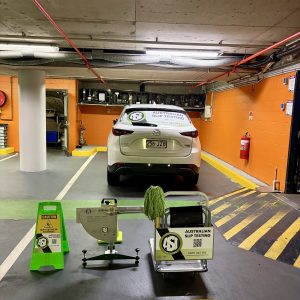
Car parks and basement areas often feature concrete or painted surfaces that become slippery near entry and exit points where water is tracked in from outside. Transition zones between wet and dry surfaces are a consistent slip hazard in basement car parks and multi-deck parking structures.
Stairways and ramps are subject to mandatory minimum slip resistance requirements under the National Construction Code. Regular testing confirms ongoing compliance with NCC Deemed-to-Satisfy provisions and provides documented evidence for building owners and certifiers.
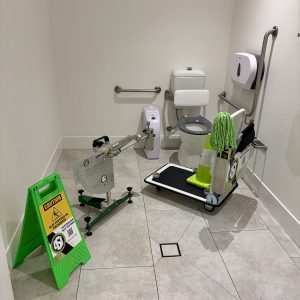
Amenities and wet areas including bathrooms, end-of-trip facilities, and change rooms present ongoing slip risk due to consistent water exposure. Surface wear and cleaning product residues can gradually reduce slip resistance in these areas.
Food courts and commercial kitchens involve a combination of wet conditions, grease, and high pedestrian traffic that creates elevated slip risk. Regular testing supports both safety management and compliance with applicable standards for food preparation environments.
Healthcare and aged care environments within managed portfolios require particular attention to slip resistance given the mobility challenges and vulnerability of patients and residents. These environments often have specific slip resistance obligations that go beyond general commercial requirements. See our guide to slip testing for aged care and schools.
Retail concourses and common areas in shopping centres and mixed-use developments involve diverse surface types, high pedestrian volumes, and varying exposure to moisture and contamination. Periodic testing across retail common areas supports proactive risk management and tenant safety obligations.
Supporting Contractor Oversight and Verification
Facilities management companies engage a range of contractors whose works can directly affect the slip resistance of managed surfaces. Independent slip testing provides third-party verification that contractor works have been completed to the required standard and have not negatively impacted floor safety.
Cleaning contractors conducting strip and seal programs, deep cleaning, or surface treatment works can alter slip resistance, particularly on smooth internal surfaces. Independent post-works testing confirms surface performance before areas are returned to pedestrian use. See our guide to slip testing for cleaning companies.
Flooring contractors replacing or refurbishing floor surfaces should provide post-installation verification that installed surfaces meet specified slip resistance classifications. Independent testing provides documented evidence that is more reliable than manufacturer data sheets alone.
Maintenance and refurbishment contractors carrying out works that involve surface coatings, sealants, or treatments should be required to provide independent verification following works. This protects the facilities management company from inheriting liability for substandard contractor performance.
Building a Slip Testing Schedule for Your Portfolio
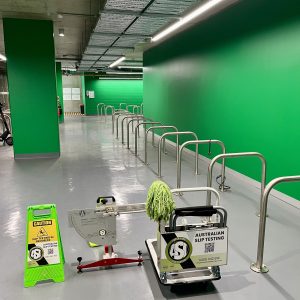
A structured slip testing schedule is one of the most effective tools available to facilities managers for managing slip risk across a portfolio. Rather than reactive testing following incidents or complaints, a scheduled program provides a consistent baseline of surface performance data that supports proactive maintenance decisions and ongoing compliance documentation.
High-risk areas including external surfaces, stairways, ramps, wet areas, and building entries should be tested more frequently than lower-risk internal dry areas, typically annually, biannually, or quarterly depending on traffic volumes and environmental exposure.
Post-works testing should be built into contractor management procedures as a standard requirement following any cleaning, flooring, or surface treatment works that may affect slip resistance.
Incident response testing should be conducted promptly following any slip or fall incident to establish an objective record of surface conditions. This documentation is critical in any subsequent insurance or legal matter.
New asset onboarding should include baseline slip resistance testing of all relevant surfaces when commencing management of a new facility. Baseline testing establishes a documented record of surface conditions at the start of the management contract, protecting the facilities management company from liability for pre-existing conditions.
For further guidance on testing frequency, see our guide to how often slip testing should be conducted.
What Is Included in a Slip Test Report for Facilities Managers
Following testing, Australian Slip Testing provides a detailed report that facilities managers can use directly for risk management, compliance documentation, and contractor oversight purposes. Each report includes tested areas and surface descriptions, testing methods used including wet pendulum testing and dry floor friction testing, slip resistance classifications achieved under AS 4586 and AS 4663, practical commentary on results, and NATA-accredited laboratory details. Reports are formatted to support inclusion in asset management systems, risk registers, and compliance documentation frameworks used by professional facilities management organisations.
Why NATA Accreditation Matters for Facilities Management
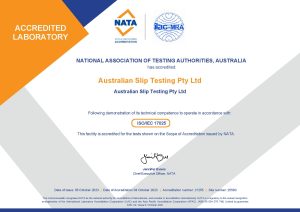
For facilities management companies managing assets on behalf of building owners, asset managers, and institutional investors, the credibility of slip testing results matters. NATA accreditation means the testing provider has been independently assessed against internationally recognised standards for testing competence. Results from a NATA-accredited provider are traceable, reliable, and suitable for compliance, legal, and insurance purposes.
In the event of a slip and fall incident, legal dispute, or insurance claim, results from a NATA-accredited provider carry significantly more weight than results from an unaccredited provider. Engaging an accredited provider protects both the facilities management company and the building owner, and provides defensible documentation that demonstrates professional management of floor safety obligations.
Frequently Asked Questions
How often should slip testing be conducted across a managed facility?
There is no single mandated frequency for all environments. High-risk areas including external surfaces, stairways, ramps, and wet areas are generally tested annually, biannually, or quarterly. Post-works testing should be conducted following any cleaning, flooring, or surface treatment works. Baseline testing is recommended when commencing management of a new facility. See our guide to how often slip testing should be conducted.
Can slip testing be conducted without disrupting building operations?
Yes. Slip resistance testing is non-destructive and can generally be conducted without closing areas or significantly disrupting normal building operations. For high-traffic areas, testing can be scheduled during off-peak hours or outside business hours. Australian Slip Testing offers out-of-hours testing for facilities that require it.
What should a facilities manager do if a surface fails a slip resistance test?
If a surface does not meet the required classification, the first step is to review the cleaning regime and any surface treatments that may be affecting performance. If cleaning changes do not resolve the issue, remediation options may include anti-slip treatments, surface grinding or profiling, or replacement of the flooring material. Australian Slip Testing can provide practical guidance on appropriate next steps and conduct verification testing following remediation works.
Can Australian Slip Testing provide consistent testing across a national portfolio?
Yes. Australian Slip Testing provides national coverage across Australia, allowing facilities management companies to engage a single NATA-accredited provider for all locations within their portfolio regardless of state or territory.
Does slip resistance change over time in managed facilities?
Yes. Surface wear, cleaning practices, surface treatments, algae growth, and environmental exposure can all reduce slip resistance over time. This is why periodic testing is recommended even for surfaces that have previously met required classifications.
What is the difference between AS 4586 and AS 4663 for facilities managers?
AS 4586 applies to new pedestrian surface materials prior to installation and is relevant when specifying new flooring. AS 4663 applies to existing installed surfaces and is the most relevant standard for facilities managers assessing the ongoing condition of surfaces within managed buildings.
Work With Australian Slip Testing
Australian Slip Testing works with facilities management companies across Australia to provide independent, NATA-accredited slip resistance testing that supports risk management, contractor oversight, compliance documentation, and liability protection across single sites and large multi-site portfolios. Whether you manage a single commercial building or a national portfolio of diverse assets, our team can provide the testing support, scheduling flexibility, and professional documentation your clients and stakeholders expect.
Call 0405 042 814 or email info@australiansliptesting.com.au to discuss your portfolio requirements.
Related Slip Testing Guides

How Often Should Slip Testing Be Conducted?
TLDR: There is no fixed mandatory testing interval under Australian Standards. How often slip testing should be conducted depends on the environment, traffic levels, surface type,
Australian Slip Resistance Ratings Explained
TLDR: Australian slip resistance ratings classify how slip-resistant a surface is under AS 4586. Four testing methods produce four separate rating scales: P ratings (wet pendulum),

What is Wet Pendulum Slip Testing?
Wet pendulum slip testing is a widely used and reliable method for measuring slip resistance on floor surfaces in wet conditions. This test uses a calibrated pendulum device to sim
Slip Resistance Testing for Cleaning Companies and Cleaning Contractors
TLDR: Strip and seal works, deep cleaning programs, and surface treatments can all alter floor slip resistance. If a slip and fall incident occurs on a surface you have cleaned or